

Alena J
A homeowner in your suburb has a burst pipe at 11pm. Two years ago she would have typed “emergency plumber near me” into Google, scrolled a few listings, opened three tabs and called whoever looked safest. Tonight she opens ChatGPT and asks, “Who’s a reliable emergency plumber near me that’s open now?” and the AI gives her one name. Maybe three. With reasons.
If your business is one of those names, your phone rings. If it isn’t, you never existed in that conversation and unlike Google, there’s no page two to scroll to.
This is the single biggest shift in how customers find tradies since Google Maps, and most trade businesses in Australia haven’t adjusted for it yet. This guide breaks down exactly how AI assistants decide who to recommend, which signals they read, and the practical steps to make your business the answer, written for the Australian market, not copied from a US playbook.
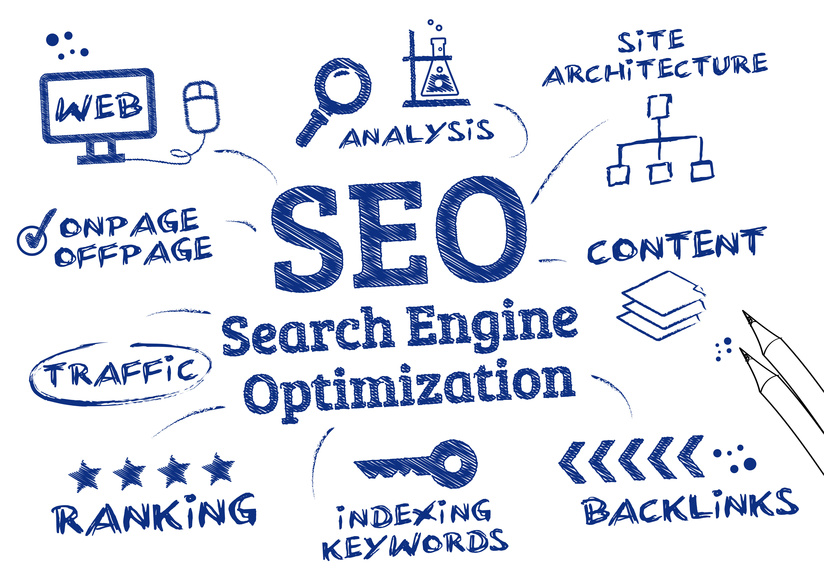
For 20 years, getting found online meant ranking. You wanted to be in the top three blue links or the local map pack, because that’s where clicks went. The whole SEO industry was built around climbing a list.
AI search breaks that model. Instead of handing you ten options, tools like ChatGPT, Google AI Mode, Perplexity, Gemini and Claude read the web, weigh it up, and produce a synthesised answer that names a small number of businesses. The customer often never visits a website at all, this is what’s now called “zero click” search. Your goal stops being traffic and becomes being mentioned.
Two related Google features drive this in Australia:
At Google I/O 2026, Google confirmed AI Mode has reached around a billion users and that search agents and AI generated result pages are rolling out widely. This isn’t a “wait and see” trend anymore, it’s how a growing share of your future customers already search. If you want the bigger picture view of what’s changed, our breakdown of how AI is changing SEO in 2026 sits alongside this piece.
Trade services are exactly the kind of query AI loves to answer with a recommendation. They’re local, high intent, urgent and personal, “I need someone good, near me, now.”That’s a recommendation, not a research project.
The behaviour is already measurable. OpenAI has reported that a large slice of ChatGPT conversations, close to half, involve people asking for advice or recommendations on who to hire. One agency that tested 600 plumbing related AI queries found the overwhelming majority returned a named business rather than a generic “here’s how to find a plumber” answer. Tradies are being recommended by AI right now. The only question is whether it’s you or your competitor down the road.
And the timing favours the businesses that move first. Most of your local rivals are still arguing about Google rankings and haven’t even checked what AI says about them. That gap is the opportunity.
You don’t need the jargon to win, but you’ll see it everywhere, so here’s the plain version:
In practice they overlap heavily, and both build on the local SEO fundamentals you should already have. None of this replaces traditional SEO, it sits on top of it. A fast, technically sound, well structured website is still the launchpad. If you’re unsure your foundations are solid, start with our complete website SEO guide for 2026 and our piece on why plumbers, electricians, builders and roofers need local SEO.

AI engines don’t “rank” you the way Google’s classic algorithm did. They synthesise a consensus , what does the whole internet seem to agree is true about this business? They reward the company that is mentioned most consistently, described the same way everywhere, and trusted by third parties. Here are the signals that move the needle, in roughly the order they matter for trades.
Your Google Business Profile (GBP) is the single most important asset for local AI visibility, because it’s where Google’s Gemini pulls local data for AI Overviews and AI Mode andother AI tools cross reference it too.
Fill in every field: correct primary and secondary categories (wrong categories are the most common mistake we see), full service list with descriptions, service areas down to the suburb, hours, attributes (after hours, free quotes, licensed, insured), and a steady stream of fresh photos. Post updates at least monthly so the profile looks active, AI strongly favours businesses that look alive over ones whose last sign of life was two years ago. We go deeper on getting real returns from your profile in how to track ROI from your Google Business Profile.
For trades, reviews carry enormous weight with AI, often more than they do in Google’s traditional map pack. But here’s the part most tradies miss: AI doesn’t just count your Google reviews. It cross references multiple platforms to confirm you’re legitimate.
In Australia that means your reputation should be consistent across Google, ProductReview.com.au, hipages, Oneflare, Airtasker, ServiceSeeking, Facebook, and any trade specific directory you’re listed on. A business with 80 Google reviews and nothing anywhere else can lose to a competitor with reviews spread across four platforms, because the spread reads as broader, more credible proof. Reply to reviews too, engagement is a trust signal. Our guides on boosting your Google star rating and understanding your online reputation score cover the how.
NAP stands for Name, Address, Phone andit has to be identical everywhere your business appears: GBP, your website, the Australian Business Register, hipages, True Local, White Pages, Yellow Pages, social profiles, the lot. AI engines are building an internal model of your business as an entity (a distinct, real thing in the world). Every inconsistency, “St” on one listing, “Street” on another, an old mobile number lingering on a directory, chips away at the AI’s confidence that all these mentions are the same business. Consistency is boring. It’s also one of the highest leverage things you can fix this week.
Schema markup (structured data written in JSON LD) is code that tells search engines and AI exactly what your business is, instead of forcing them to infer it from your page text. For tradies, the schema types that matter most are:
If you only do one technical thing, make your reviews and FAQs machine readable. We unpack the on page side of this in on page SEO in 2026: what Google still cares about. (A paste ready schema starter is at the bottom of this article.)
This is the one tradies underuse most. AI trusts what other sites say about you far more than what you say about yourself. A mention in a local news outlet, an industry body listing, a supplier’s “find an installer” page, or a genuine forum thread on Reddit carries more weight than another self written line on your homepage.
This ties directly to E E A T, Experience, Expertise, Authoritativeness, Trustworthiness, which both Google and AI engines lean on heavily. For trades, your strongest E E A T signals are concrete and verifiable: your licence number, your ABN, accreditations (Master Electricians Australia, Master Plumbers, Clean Energy Council, HIA, and so on), insurance, years in business, and named, real project references with photos. Put these on the page in plain text. “Licensed electrician, NSW Licence #XXXXX, 14 years serving Western Sydney” is the kind of specific, checkable claim AI uses to decide you’re the real deal.
AI has already read a million “how to unblock a drain” articles. Publishing another adds nothing and won’t get cited. What earns a mention is information gain, content that says something the AI doesn’t already have a thousand copies of.
For trades, that’s answer first, locally specific content: real price ranges for your area, the questions customers actually ask before booking, suburb level service detail, and genuine project case studies. Lead each page or section with a direct answer in the first two sentences, then expand. This is the AEO discipline in action. If you’re using AI to help draft, our guide on using ChatGPT to write high converting website copy shows how to keep it sounding like you, because recycled, generic AI copy is exactly what won’t get you cited.

Different assistants weight different signals. You don’t need to game each one, but knowing how they tick helps you prioritise.
The good news: optimise properly for Google AI Mode and you’ve done most of the work for all of them. The signals overlap far more than they differ.
Most “get recommended by ChatGPT” advice online is American and tells you to optimise for Yelp, Angi, BBB and Home Advisor, directories that barely matter in Australia. Ignore that. Your Australian trust ecosystem is Google Business Profile, ProductReview.com.au, hipages, Oneflare, Airtasker, ServiceSeeking, True Local, the Australian Business Register, and your relevant trade body.
One more Australian specific point worth clearing up, because some agencies get it wrong: Google Local Services Ads and the “Google Guaranteed” badge are not available in Australia as of 2026. Google’s own sign up flow only lists a handful of countries (the US, UK, Canada and several European markets), Australia isn’t one of them. If a provider offers to “set up your LSAs in Australia,” treat it as a red flag. Here, the honest equivalent is strong local SEO plus standard Google Ads for instant visibility, a trade off we walk through in SEO vs paid ads in 2026: where should you invest first, and in our Google Ads for tradies service.

Before you change anything, find out where you stand. Open ChatGPT, Google AI Mode and Perplexity and ask each one the way a customer would:
“Who’s the best [your trade] in [your suburb]?” “I need an emergency [your trade] near [your suburb], who should I call?” “Recommend a reliable, licensed [your trade] in [your area].”
Note whether you’re mentioned, whether the details are correct, and who is getting recommended instead. That competitor is your benchmark. If your name doesn’t come up, or the AI gets your phone number or service area wrong, you’ve just found your priority list.
Here’s how to turn all of the above into a sequence you can actually work through.
Most businesses see early movement within 60–90 days of consistent work, competitive metros can take a little longer.
AI search hasn’t made marketing harder so much as it’s raised the reward for doing the fundamentals properly. Complete profiles, consistent information, real reviews across multiple platforms, readable structured data, genuine third party trust and content that actually answers the question, that’s what gets a tradie recommended by ChatGPT, named in Google AI Mode, and cited by Perplexity. It’s also, not coincidentally, what builds a business that keeps the phone ringing when the spend stops, the same principle behind building a referral machine.
The businesses that sort this out now will own the AI recommendation in their trade and town for years, while competitors are still wondering why a quiet week got quieter.
If you’d rather have it handled, this is exactly what we do. Explore our SEO for tradies, web design, professional blog writing and content development services, or specialist help for electricians, plumbers, builders and painters. Ready to find out why AI isn’t recommending you yet? Get in touch.
There’s no submission form. ChatGPT recommends businesses it can verify as legitimate and consistently well reviewed. Get a complete Google Business Profile, build reviews across multiple Australian platforms (Google, ProductReview.com.au, hipages, Oneflare), keep your name, address and phone identical everywhere, add structured data to your website, and earn mentions on trusted third party sites. Most businesses see results within 60–90 days.
Yes, Google AI Mode launched in Australia in October 2025 and is expanding quickly. AI Overviews, the AI summary box above search results, has been live in Australia since October 2024. Both pull heavily from your Google Business Profile and reviews for local recommendations.
Traditional SEO aims to rank your website higher in the list of search results. GEO (Generative Engine Optimisation) and AEO (Answer Engine Optimisation) aim to get your business named inside AI generated answers from tools like ChatGPT, Google AI Mode and Perplexity. GEO and AEO build on a solid SEO foundation rather than replacing it.
For trades, reviews carry serious weight with AI, and crucially, AI cross references reviews across several platforms rather than just counting your Google total. A business with reviews spread across Google, ProductReview.com.au and hipages often looks more credible to AI than one with reviews on Google alone.
No. As of 2026, Google Local Services Ads and the Google Guaranteed badge are not available in Australia, Google’s sign up only lists a handful of overseas countries. Australian tradies should focus on local SEO plus standard Google Ads instead. Be wary of any provider claiming to set up LSAs in Australia.
Most businesses see early improvements within 60 to 90 days of consistently updating their profiles, reviews and website content. Competitive city markets can take longer, and authority built through third party mentions compounds over time.
SEO Expert & Content Writer
Alena J is an SEO Expert and Content Writer who loves helping businesses grow online. She creates interesting content and makes sure it shows up on search engines so more people can find it. In her spare time, she enjoys reading books and has a great love for animals.

Heytradie is all about helping you succeed and stand out. We’re the best because we really help tradies grow their business with cool digital tools and great customer service. Join us and see why we’re the top choice for tradies who want to do better.
Copyright © 2026 Heytradie.